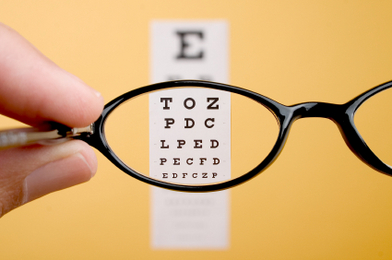
5 Best Eye Exercises for Myopia

Test for Myopia

Test for MyopiaBy doing eye exercises for myopia, you can avoid this common vision defect. This means that you don’t have to fall victim to one of the most widespread eye disorders in the world.

With most of our waking hours spent in front of a screen, it is no surprise that myopia, also known as short-sightedness or near-sightedness, will affect around 50 percent of the world’s population, according to a recent study published in the journal “Opthalmology”.

However, this does not mean that you have no choice but to suffer from this condition. It can be avoided using simple techniques.

If you have already developed myopia, you can slow down its progression or even cure it using simple, yet effective eye exercises for near-sightedness.

So, if you want healthy eyes with a good vision, here are the best 6 eye exercises for near-sightedness you should practice daily.

5 Eye Exercises for Myopia (short-sightedness)

1. Eye-finger exercise

The eye-finger exercise is one of the best eye-exercises for myopia. It’s extremely simple too.

Instructions:

  • Stand upright in the center of a room, facing a wall where a painting or a poster is hung up.
  • Now, raise your right index finger and hold it a few inches away from your nose.
  • The next step is to focus your vision on the tip of your finger. Make sure that you do not quickly glance at it, but rather see it clearly before you shift your gaze to the poster or painting in front. When you shift your gaze, the painting/picture will be blurry for the first few seconds. But once you focus, it will become clearer.
  • Move farther and farther away from the painting/poster, and repeat.


2. Pencil push-ups

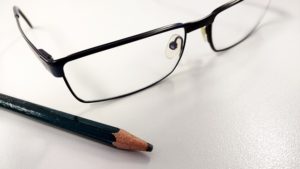
The second eye exercise for near-sightedness is known as pencil push-up. It can help you prevent your eyes from getting too strained while looking at objects which are at a distance.
Instructions:

  • Take a pencil, hold it at a distance where you start to see it as double.
  • The next step is to imagine that there is a tic-tac-toe board right in front of you.
  • Move the pencil around, letting it touch each of the four imaginary corners of the board.
  • As the pencil moves, follow the movement with your eyes.
  • Do this once daily to improve your vision.


3. Focus exercise with thumb/pencil

Another great eye exercise for myopia is the focus exercise, which was developed by the famous optometrist, Marc Grossman. You can do this using either a pencil or your thumb.
Instructions:

  • Sit yourself down comfortably on a chair, then lift up your right thumb or hold a pencil about six to seven inches away from your nose.
  • Make sure to hold it on the level of the tip of your nose.
  • Glance at the pencil or your thumb. Remember, it’s just a glance, don’t focus on it.
  • Quickly shift the gaze of your eyes to another object that is placed in a different area in the room. Focus on this for several seconds, then shift to the pencil/thumb again.
  • Repeat this 10 times every day.


4. Looking at distant objects

This is one of the simplest eye exercises for myopia. Focusing your eyes on nearby objects for a long time can be detrimental to your eyesight and overall health of your eyes. It can be reading a book or staring at a screen. Spending a long period of time in front of screens, especially, can strain your eyes a lot.

Instructions:

  • When you’re working in front of your laptop or reading a book, make sure to take a break and relax your eyes.
  • You can do this by focusing your vision on distant objects, preferably objects which are outdoors like a tree or a building. If possible, gazing at some kind of landscape really helps. You’ll find that looking at far-off objects are much relaxing for your eyes.


5. Scanning a room

The next exercise is simply scanning a room with your eyes.

Instructions:

  • Sit in a room filled with many objects.
  • Starting from one side, slowly and carefully scan all the objects you can find on that side of the room.
  • After you’re done, move to another side of the room.
  • Make sure to look at all the objects carefully in great detail, with your eyes moving around from object to object.


Remember that your eyes are muscles too and require exercise just like the rest of your body. For the best results, practice at least three of these eye exercises for myopia daily and you will see improvement in your eye health as well as vision.
How to Improve Eyesight Without Glasses

Man covering eye to do eye exercises

Blue eyes with good eyesightIf your vision isn’t perfect, you may be wondering how to improve eyesight without glasses. Although science has not yet established practices that will definitely help you go from thick glasses to not needing glasses at all anymore, there are practices that will help you improve your vision without having to wear glasses or undergo surgery.

If you have fairly good vision and have not been prescribed corrective lenses of any kind, you have a better chance of improving your eyesight naturally. The secret to having improved vision is not complicated. All you have to do is follow the tips that we have outlined below.

Tips for improving eyesight

Eat healthy foods that promote good eyesight

Your diet affects your overall health, including the health of your eyes. While adopting a healthy diet may not give you 20/20 vision, it can certainly provide your eyes the nutrition they require in order to function optimally.

Make sure to include tomatoes, carrots, leafy greens, and guava in your meals. These help fight against various unwanted eye diseases like age-related macular degeneration and cataracts. They can also help prevent retinitis pigmentosa, a condition where the rod cells of your retina degenerate.

Eating berries like black currants and blueberries really help too because of their antioxidant properties.


Practice eye exercises every day

Man covering eye to do eye exercises

Just like how your body needs physical exercise to be healthy, your eyes also need exercises for optimal performance. One of the best ways to cure eyesight naturally is to provide your eyes with regular daily exercise. They will strengthen your eye muscles and improve your vision, helping you avoid glasses or contact lenses.

Firstly, remember to look up regularly from your computer screen, phone or book. Look into the distance to give your eyes a break from the intense focus of staring at something up close.

You can also practice specific eye exercises. Your optometrist or eye specialist might recommend some targeted at your particular eye condition.

A good general eye exercise anyone can follow.

  • First, rub your palms together.
  • After you feel your palms getting heated up, place them over your eyes to transfer the heat. Make sure to do this before you start any exercise.
  • Then, roll your eyes as far as you can (but stop before it hurts) towards the left, then right, then up and down.
  • For each direction, roll 10 times each.

This is just one of the many eye exercises. You can research and see which work best for you.


Make sure that you get enough sleep and rest

All day, we strain our eyes at work or school. Whether it is reading, writing or sitting in front of a screen, our eyes know no rest except when we sleep. So, make sure to get plenty of sleep.

If you want healthy eyes without the need for glasses, get at least 8 hours of sleep every night. Also, stay away from your phone, tablet, TV or laptop for an hour before you go to sleep. Not only will this protect your eyes and reduce screen time, it also improves your quality of sleep.

Even while working, make sure to take small breaks in between. Staring at a computer screen all day can be extremely damaging for your vision, so, for every 50 minutes you spend in front of your computer, take around 10 minutes of break. You can catch some fresh air, drink water or talk to a colleague.


Spend more time outside and less time inside

Myopia is a common eye condition that millions of people all over the world suffer from. It is also known as near-sightedness and patients are unable to see clearly objects which are at a distance. It appears blurry to them. Despite being a common condition, you can take steps to prevent it from happening to you. Here’s how to cure eyesight naturally and prevent the development of myopia – spend more time outside.

Research has shown that for every extra hour that children spend outside every week, their chance of developing myopia or near-sightedness reduces by 2 percent. This is because when you’re outside, your eyes are less strained since you tend to focus on objects which are farther. Also, you don’t spend time in front of screens as much.


Quit smoking

Smoking has proven to be extremely detrimental not just to your lungs and throat but your eyes too. It can increase your risk of developing cataract and even lead to macular degeneration. So, if you’re looking for ways on how to improve eyesight naturally without glasses, it would do you well to give up smoking.

It is important to remember that the above steps may not work for everyone and will not cure your vision magically. However, the overall health of your eyes will definitely improve if you follow the above steps on how to improve eyesight without glasses.


Three Effective Lazy Eye Exercises for Adults

Ambylopia, also known as lazy eye, is treatable in adulthood if you invest time and energy in performing effective lazy eye exercises for adults.

Even a couple of years ago, people were skeptical about making significant vision improvements in their problematic eye after leaving it untreated throughout their childhood. With vision therapy tailored to the needs of the individual patient, lazy eye correction has become accessible as well as achievable.

While customized vision therapy occurs under the supervision of a behavioral optometrist, you can expect specific eye exercises targeted at retraining your affected eye to be part of the sessions.

Here is a look at a few exercises that have a meaningful impact on fixing lazy eyes in adults.


Three Lazy Eye Exercises for Adults

Exercise 1: Palming

Man covering eye to do eye exercises

Palming is a famous eye relaxation technique used mainly to correct refractive errors and improve vision by relaxing rigid and strained eye muscles. It may be used in conjunction with other exercises for lazy eye treatment.

  1. Sit upright at your study desk or dining room table.
  2. If your hands are cold, rub them together.
  3. Then, cover your eyes with your hands without putting pressure on your eyeballs.
  4. Cup your palms lightly over your eyes without touching them. Cup your eyes such that no light filters in.
  5. Keep your eyes closed, breathe normally and stay in position for half a minute.
  6. Repeat a few times each day if you spend many hours at the computer.


Exercise 2: Thumb/Finger exercise

Select an object located far away and keep looking at it by stretching out your hand and positioning your thumb at the height of the object. You will see two images of the object.

With your eye focused on your thumb and the images still in sight, first look at the image on the left and try to pick out as many details – color, shape, font, graphics – as you can. Repeat the same for the image on the right.

You will notice that one of the images isn’t as clear as the other. The fuzzy image is the one you see with your weaker eye. Spend more time training with this eye and along with full-fledged vision therapy for your lazy eye, you should be able to improve your eyesight naturally.


Exercise 3: Mirror exercise

This is one of the more enjoyable lazy eye exercises for adults. If you’ve been sitting at the desk for too long, here’s a great excuse to get on your feet, move your body a bit and relax your eyes as well train them to work together while you’re at it!

  1. Stand in front of a mirror, with your back to the mirror. Set your feet apart slightly. Cup your healthy eye (say your left eye) with your palm and look straight in front with the other eye (right eye).
  2. Move the upper part of your body to twist in the direction of the lazy eye, that is, to the right and see your eye in the mirror.
  3. Swing back into your initial position.
  4. Repeat the procedure by cupping your right eye and swaying left until you see your eye in the mirror.


More extensive vision therapy for adults with lazy eyes

Vision therapy involves both lazy eye exercises for adults and therapeutic lenses, prisms and other aids to train the problematic eye. Under the guidance and support of a qualified behavioral optometrist, and with sustained effort and patience from your side, there is no reason why you shouldn’t be able to equalize vision in both eyes and enjoy a single, clear vision.


What Is The Bates Method?

What Is The Bates Method?  The Vision Improvement Principles of Dr Bates.

What exactly is the Bates method for vision improvement and what kinds of principles and techniques does it consist of? The Bates method is a natural vision correction alternative to glasses introduced by Dr William Horatio Bates, MD. Dr. Bates taught that the main causes of eye conditions were associated with the continual strain imposed on the eye muscles as a result of habitual close up work.

He emphasized that the key to improving eyesight could be achieved by eliminating the causes and the sources of this eye strain. This was accomplished with the regular practice of techniques that teach the eyes to relax. He also taught that a continued reliance on glasses would lead to a scenario of stronger prescriptions and weaker eyes.

Here are some of the basic principles and concepts that Dr. Bates taught:

Basic Eye Relaxation Techniques: The approach of the Bates method included a variety of natural techniques. These involved healing the eyes through relaxation exercises that were not only physical, but mental, to remove eye strain; one of the main causes of eyesight problems. Examples of some of these techniques included sunning, palming, blinking, visualization exercises and simple eye movements to name a few. In his career as an eye doctor, private practitioner and lecturer of Ophthalmology, Dr. Bates achieved success with the practice of these techniques.

The Principle behind Relaxation Techniques: Relaxation techniques were the central focus of Dr. Bates’ treatment methods for vision correction. The techniques involved solving vision problems by eliminating mental stress sources associated with bad eyesight. Additionally, some vision and eye relaxation exercises were utilized to relieve stress, strain and tension in the visual system.

Eliminate Poor Eyesight by Replacing Bad Visual Habits with Good Ones: Dr Bates taught that symptoms associated with poor eyesight were related to bad visual habits. These made the eyes prone to stress and tension in the visual system. Such examples of poor visual habits included exposing the eyes to excessive continual close up work like reading and studying without incorporating breaks into your routine. The Bates method discussed the importance of replacing bad visual habits with eye relaxation techniques that remove stress and strain from the eye muscles.

The Vision exercise, Bates method taught the idea that much in the same way that an injured leg could be healed through effective physical therapy, so could the eyes as well in terms of its natural ability to heal from vision disorders. Therefore, vision can be restored to normal once again though effective forms of eye relaxation and vision exercise techniques, without having to rely on glasses as a crutch.

The Bates Method is a method of vision improvement that is described as a natural alternative to glasses, contact lens and laser surgery.  Dr. Bates taught a series of principles related to the healing of the eyes and restoring it to its natural function to achieve better eyesight and eye health. This was accomplished by paying attention to the central focus of the program; the application of relaxation techniques to relieve stress, strain and tension from the mind, body and eye muscles to restore better eyesight without glasses. Ultimately, this natural approach in Dr. Bates’ career yielded successful results with his patients.