
7 Foods to Improve Eyesight

Healthy food with vitamins for good eyesight

Healthy food with vitamins for good eyesight Today, threats to our eyesight are greater than ever, meaning that it has never been so important to eat the right foods to improve eyesight.

Think about it. At work, we all spend hours and hours in front of a computer. Even when we take breaks, we are mostly on our phones. And when we come home, we are glued to the screen again.

It’s no surprise then that over 25 million people all over the world suffer from cataracts and age-related macular degeneration. These often lead to blindness in people who are above 55 years old. However, you don’t have to fall into this category. There are certain steps you can take, and one of the most important is to eat the right foods to improve eyesight without glasses.

7 Foods to Improve Eyesight

Below, we list out the top 7 foods which are good for your eyes. Make sure to include them regularly for improved vision.

Fish

Sardines, salmon, tuna, and other cold-water fish are some of the best foods you can eat for healthy eyes. They are extremely rich in essential Omega-3 fatty acids, resulting in increased regrowth of blood vessels in your retina. The Omega-3 acid that is particularly good for eyes is called DHA, which stands for docosahexaenoic acid – a major component of our brain and retina.

Make sure to have about two servings of these kinds of fish every week.


Carrots

roast vegetables

You’ve probably already heard it a million times, but carrots really do work wonders for your eyes. They are powerful antioxidants and are rich in Vitamin A and Vitamin C. Because of these properties, carrots play a huge role in stopping oxidative damage, thereby significantly reducing your risk of developing age-related macular degeneration. It is no wonder that carrots are popularly known as the staple food to improve eyesight.


Eggs

Eggs are rich in protein, Vitamin E and Vitamin A, Lutein, and Omega-3 acids – components which are all required for healthy eyes and improved vision. They are one of the best foods to improve eyesight without glasses, not only because they are rich in necessary nutrients that are good for your eyes but also because they are everyone’s favorite breakfast! You can enjoy yummy omelets and boiled eggs, all the while strengthening your eyes.


Leafy greens

Vitamin enriched foodsLeafy greens like kale and spinach can work wonders for your eyes. They are fully packed with all kinds of vitamins, antioxidants, and carotenoids like zeaxanthin and lutein, making them perfect for lowering your risk of developing a cataract. In case you have already developed a cataract, regularly consuming leafy greens like these can even slow down its progression. You can either use them in a salad, as a side dish or make delicious smoothies out of them.


Berries

Berries like black currants, blueberries, and other red-colored berries are a good source of antioxidants and are rich in Vitamin C. They are among the best foods to improve your eyes. The nutrients found in such berries can help in the prevention of various disorders that often lead to vision impairment or even blindness. Moreover, berries are also very rich in zinc, strengthening and protecting your eyes from common eye health problems like night blindness and age-related macular degeneration.


Nuts

It’s no secret that nuts are good for your overall health. But did you know that they are especially a blessing to your eyes? They are rich in zinc, Vitamin E, and essential fatty acids, all of which are components that your eyes can greatly benefit from, making them the perfect foods to improve your vision. So, snack on nuts without worrying, add them to your salad or even your pasta. You can even make your own granola bar or trail mix.


Whole Grains

Whole grain foods like brown rice, whole oats, quinoa, whole-wheat bread, barley and more are low in glycemic index. This makes them play an important role in reducing the risk of developing age-related macular degeneration. Moreover, they are rich in niacin, Vitamin E, and Zinc – all components which are great for improving your eye health. So, whenever you are looking for foods to improve eyesight, make sure to include whole grains.


These are among the healthiest foods for your eyes that you can greatly benefit from. Just like the rest of your body, your eyes too need proper nutrition, and these foods ensure that you receive this. So, every day, make sure to include a selection of these foods to improve eyesight.
5 Best Eye Exercises for Myopia

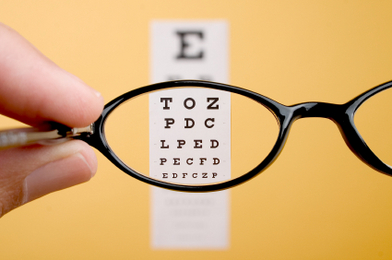
Test for Myopia

Test for MyopiaBy doing eye exercises for myopia, you can avoid this common vision defect. This means that you don’t have to fall victim to one of the most widespread eye disorders in the world.

With most of our waking hours spent in front of a screen, it is no surprise that myopia, also known as short-sightedness or near-sightedness, will affect around 50 percent of the world’s population, according to a recent study published in the journal “Opthalmology”.

However, this does not mean that you have no choice but to suffer from this condition. It can be avoided using simple techniques.

If you have already developed myopia, you can slow down its progression or even cure it using simple, yet effective eye exercises for near-sightedness.

So, if you want healthy eyes with a good vision, here are the best 6 eye exercises for near-sightedness you should practice daily.

5 Eye Exercises for Myopia (short-sightedness)

1. Eye-finger exercise

The eye-finger exercise is one of the best eye-exercises for myopia. It’s extremely simple too.

Instructions:

  • Stand upright in the center of a room, facing a wall where a painting or a poster is hung up.
  • Now, raise your right index finger and hold it a few inches away from your nose.
  • The next step is to focus your vision on the tip of your finger. Make sure that you do not quickly glance at it, but rather see it clearly before you shift your gaze to the poster or painting in front. When you shift your gaze, the painting/picture will be blurry for the first few seconds. But once you focus, it will become clearer.
  • Move farther and farther away from the painting/poster, and repeat.


2. Pencil push-ups

The second eye exercise for near-sightedness is known as pencil push-up. It can help you prevent your eyes from getting too strained while looking at objects which are at a distance.

Instructions:

  • Take a pencil, hold it at a distance where you start to see it as double.
  • The next step is to imagine that there is a tic-tac-toe board right in front of you.
  • Move the pencil around, letting it touch each of the four imaginary corners of the board.
  • As the pencil moves, follow the movement with your eyes.
  • Do this once daily to improve your vision.


3. Focus exercise with thumb/pencil

Another great eye exercise for myopia is the focus exercise, which was developed by the famous optometrist, Marc Grossman. You can do this using either a pencil or your thumb.

Instructions:

  • Sit yourself down comfortably on a chair, then lift up your right thumb or hold a pencil about six to seven inches away from your nose.
  • Make sure to hold it on the level of the tip of your nose.
  • Glance at the pencil or your thumb. Remember, it’s just a glance, don’t focus on it.
  • Quickly shift the gaze of your eyes to another object that is placed in a different area in the room. Focus on this for several seconds, then shift to the pencil/thumb again.
  • Repeat this 10 times every day.


4. Looking at distant objects

This is one of the simplest eye exercises for myopia. Focusing your eyes on nearby objects for a long time can be detrimental to your eyesight and overall health of your eyes. It can be reading a book or staring at a screen. Spending a long period of time in front of screens, especially, can strain your eyes a lot.

Instructions:

  • When you’re working in front of your laptop or reading a book, make sure to take a break and relax your eyes.
  • You can do this by focusing your vision on distant objects, preferably objects which are outdoors like a tree or a building. If possible, gazing at some kind of landscape really helps. You’ll find that looking at far-off objects are much relaxing for your eyes.


5. Scanning a room

The next exercise is simply scanning a room with your eyes.

Instructions:

  • Sit in a room filled with many objects.
  • Starting from one side, slowly and carefully scan all the objects you can find on that side of the room.
  • After you’re done, move to another side of the room.
  • Make sure to look at all the objects carefully in great detail, with your eyes moving around from object to object.


Remember that your eyes are muscles too and require exercise just like the rest of your body. For the best results, practice at least three of these eye exercises for myopia daily and you will see improvement in your eye health as well as vision.

How to Improve Eyesight Without Glasses

Man covering eye to do eye exercises

Blue eyes with good eyesightIf your vision isn’t perfect, you may be wondering how to improve eyesight without glasses. Although science has not yet established practices that will definitely help you go from thick glasses to not needing glasses at all anymore, there are practices that will help you improve your vision without having to wear glasses or undergo surgery.

If you have fairly good vision and have not been prescribed corrective lenses of any kind, you have a better chance of improving your eyesight naturally. The secret to having improved vision is not complicated. All you have to do is follow the tips that we have outlined below.

Tips for improving eyesight

Eat healthy foods that promote good eyesight

Your diet affects your overall health, including the health of your eyes. While adopting a healthy diet may not give you 20/20 vision, it can certainly provide your eyes the nutrition they require in order to function optimally.

Make sure to include tomatoes, carrots, leafy greens, and guava in your meals. These help fight against various unwanted eye diseases like age-related macular degeneration and cataracts. They can also help prevent retinitis pigmentosa, a condition where the rod cells of your retina degenerate.

Eating berries like black currants and blueberries really help too because of their antioxidant properties.


Practice eye exercises every day

Man covering eye to do eye exercises

Just like how your body needs physical exercise to be healthy, your eyes also need exercises for optimal performance. One of the best ways to cure eyesight naturally is to provide your eyes with regular daily exercise. They will strengthen your eye muscles and improve your vision, helping you avoid glasses or contact lenses.

Firstly, remember to look up regularly from your computer screen, phone or book. Look into the distance to give your eyes a break from the intense focus of staring at something up close.

You can also practice specific eye exercises. Your optometrist or eye specialist might recommend some targeted at your particular eye condition.

A good general eye exercise anyone can follow.

  • First, rub your palms together.
  • After you feel your palms getting heated up, place them over your eyes to transfer the heat. Make sure to do this before you start any exercise.
  • Then, roll your eyes as far as you can (but stop before it hurts) towards the left, then right, then up and down.
  • For each direction, roll 10 times each.

This is just one of the many eye exercises. You can research and see which work best for you.


Make sure that you get enough sleep and rest

All day, we strain our eyes at work or school. Whether it is reading, writing or sitting in front of a screen, our eyes know no rest except when we sleep. So, make sure to get plenty of sleep.

If you want healthy eyes without the need for glasses, get at least 8 hours of sleep every night. Also, stay away from your phone, tablet, TV or laptop for an hour before you go to sleep. Not only will this protect your eyes and reduce screen time, it also improves your quality of sleep.

Even while working, make sure to take small breaks in between. Staring at a computer screen all day can be extremely damaging for your vision, so, for every 50 minutes you spend in front of your computer, take around 10 minutes of break. You can catch some fresh air, drink water or talk to a colleague.


Spend more time outside and less time inside

Myopia is a common eye condition that millions of people all over the world suffer from. It is also known as near-sightedness and patients are unable to see clearly objects which are at a distance. It appears blurry to them. Despite being a common condition, you can take steps to prevent it from happening to you. Here’s how to cure eyesight naturally and prevent the development of myopia – spend more time outside.

Research has shown that for every extra hour that children spend outside every week, their chance of developing myopia or near-sightedness reduces by 2 percent. This is because when you’re outside, your eyes are less strained since you tend to focus on objects which are farther. Also, you don’t spend time in front of screens as much.


Quit smoking

Smoking has proven to be extremely detrimental not just to your lungs and throat but your eyes too. It can increase your risk of developing cataract and even lead to macular degeneration. So, if you’re looking for ways on how to improve eyesight naturally without glasses, it would do you well to give up smoking.

It is important to remember that the above steps may not work for everyone and will not cure your vision magically. However, the overall health of your eyes will definitely improve if you follow the above steps on how to improve eyesight without glasses.


Three Effective Lazy Eye Exercises for Adults

Ambylopia, also known as lazy eye, is treatable in adulthood if you invest time and energy in performing effective lazy eye exercises for adults.

Even a couple of years ago, people were skeptical about making significant vision improvements in their problematic eye after leaving it untreated throughout their childhood. With vision therapy tailored to the needs of the individual patient, lazy eye correction has become accessible as well as achievable.

While customized vision therapy occurs under the supervision of a behavioral optometrist, you can expect specific eye exercises targeted at retraining your affected eye to be part of the sessions.

Here is a look at a few exercises that have a meaningful impact on fixing lazy eyes in adults.


Three Lazy Eye Exercises for Adults

Exercise 1: Palming

Man covering eye to do eye exercises

Palming is a famous eye relaxation technique used mainly to correct refractive errors and improve vision by relaxing rigid and strained eye muscles. It may be used in conjunction with other exercises for lazy eye treatment.

  1. Sit upright at your study desk or dining room table.
  2. If your hands are cold, rub them together.
  3. Then, cover your eyes with your hands without putting pressure on your eyeballs.
  4. Cup your palms lightly over your eyes without touching them. Cup your eyes such that no light filters in.
  5. Keep your eyes closed, breathe normally and stay in position for half a minute.
  6. Repeat a few times each day if you spend many hours at the computer.


Exercise 2: Thumb/Finger exercise

Select an object located far away and keep looking at it by stretching out your hand and positioning your thumb at the height of the object. You will see two images of the object.

With your eye focused on your thumb and the images still in sight, first look at the image on the left and try to pick out as many details – color, shape, font, graphics – as you can. Repeat the same for the image on the right.

You will notice that one of the images isn’t as clear as the other. The fuzzy image is the one you see with your weaker eye. Spend more time training with this eye and along with full-fledged vision therapy for your lazy eye, you should be able to improve your eyesight naturally.


Exercise 3: Mirror exercise

This is one of the more enjoyable lazy eye exercises for adults. If you’ve been sitting at the desk for too long, here’s a great excuse to get on your feet, move your body a bit and relax your eyes as well train them to work together while you’re at it!

  1. Stand in front of a mirror, with your back to the mirror. Set your feet apart slightly. Cup your healthy eye (say your left eye) with your palm and look straight in front with the other eye (right eye).
  2. Move the upper part of your body to twist in the direction of the lazy eye, that is, to the right and see your eye in the mirror.
  3. Swing back into your initial position.
  4. Repeat the procedure by cupping your right eye and swaying left until you see your eye in the mirror.


More extensive vision therapy for adults with lazy eyes

Vision therapy involves both lazy eye exercises for adults and therapeutic lenses, prisms and other aids to train the problematic eye. Under the guidance and support of a qualified behavioral optometrist, and with sustained effort and patience from your side, there is no reason why you shouldn’t be able to equalize vision in both eyes and enjoy a single, clear vision.


Eye-Exercise Programs

There are two eye-exercise programs that are of interest to me, one incorporates the Bates Method which uses different techniques to improve various aspects of vision, including regaining the ability to adjust between near and far viewing.  The other exercise program, Vision Therapy, is a more comprehensive and sophisticated program than the exercise program available years ago.  Patients in this program receive neurological training or rehabilitation and the focus is not just on the eyes, but on the brain and body as well.  In particular, Vision Therapy emphasizes getting the patient to receive information more effectively and quickly, and to react appropriately.

It is equally important to remember the value of good nutrition and supplementation.  If you are going to go with an exercise program, you will improve your odds for success by supplementing appropriately.  Here are some excellent supplements: Lutein and Zeaxanthin which are carotenoids and support the macula; N-Acetyl Cysteine (NAC) which promotes the production of glutathione, a powerful antioxidant for clear eyes; and Astaxanthin which supports your ability to shift your vision between near and far distances.


Vision Therapy for Adults with Strabismus

Strabismus, known as ‘wandering eyes’ or ‘crossed eyes’, is a condition where the eyes are not properly aligned.   Adults who have this condition are usually told that it is too late to correct it. Common symptoms include double-vision, loss of depth perception; a pulling sensation around the eyes; difficulty reading; and seeing overlapping or blurred images, leading to confusion. It is almost impossible for those who have strabismus to make eye-to-eye contact because of the horrible twisting sensation in the eyes. This in turn has a devastating impact on social interactions, whether professional or personal.

This condition may be constant or it may occur only for sometimes, the rest of the time the eyes may be straight.

When the eye turn happens all the time, it is called constant strabismus, but when the eye turn occurs only some times, it is called intermittent strabismus. Intermittent strabismus usually appear when the person is ill or in a stressful condition.

Generally the causes of strabismus are genetics, inappropriate function of the “fusion center” of the brain, problems with the controlled center of the brain, injuries of the muscles or nerves. But most cases of strabismus are due to the control system: the brain.

In children, you may notice deviation in the eyes.  A child would not pay attention to the image from deviated eye, and only focuses at one image that comes from one eye only. In adult strabismus, the image from either eye cannot be ignored, therefore he has double vision. This condition can be very irritating because it may interfere his activities.

You may ask at what age strabismus treatment no longer should be tried. The answer is everyone at any age deserves an opportunity. Although treatment at young age is ideal and can give a better result, a study has shown that patients over the age of 50 who were never treated for their strabismus experienced a spontaneous improvement.

How can you treat strabismus?

Constant strabismus has to be treated as soon as possible. If artificial glasses or patching do not work, eye surgery needs to be considered. Most of eye surgeons prefer to give surgery and generally other treatments are not their options.

When the eye turn occurs some of the time, treatment can be performed with judicious patching, special glasses and vision therapy. Glasses / contact lenses or eye surgery are not always necessary to improve your eyesight.  There are other effective methods to have good vision in simpler ways than you can imagine such as eye exercises.

Until recently, insurance carriers would not cover surgery for strabismus, as they viewed it as merely cosmetic. Fortunately, things are changing, with more insurance carriers regarding the surgery as reconstructive.

Fortunately, again, our options for treating strabismus are expanding. For one thing, eye-care professionals are now saying that you’re never too old for corrective surgery. This surgery involves either shortening the muscles on the outside of the eye, if the eye is turned inwards; or shortening the inner muscles of the eye if it points outwardly. Typically, the operation is performed as an out-patient and the patient resumes his normal routine within just a few weeks.

A Brief Introduction To Vision Therapy For Adults

In this post, we are going to throw some light on how to improve your eyesight naturally using vision therapy. Although it is possible for many vision problems to be cured by using contact lenses as well as eyeglass corrective lenses, some others might require a different type of therapy. One such therapy happens to be the vision therapy which is actually prescribed and supervised by an optometrist for treating any issue with visual processing as well as visual skills.

It is possible to successfully cure eye movement disorders, vision related learning issues, lazy eye, ineffective eye teaming, double vision and visual processing issues by undergoing vision therapy. A person affected by these ailments can show symptoms such as fuzzy vision, poor comprehension as well as re-reading lines. Furthermore, vision therapy happens to be a highly efficient way to enhance sports performance and improve eye-hand synchronization.

By implementing vision therapy, the brain will be able to control the following:

i. eye teaming

ii. eye alignment

iii. eye movements

iv. eye focusing abilities

v. visual processing

Specialized computer and optical equipment such as prisms, therapeutic lenses, and filters help to create visual-motor stamina and expertise. The visual skills of the patient are usually strengthened during the closing phases of the treatment and these are made automated by integration with cognitive and motor skills.

Adults who are suffering from the following ailments are usually benefited by vision therapy:

1. Visual difficulties induced by stress

As compared to the past, our lifestyle during this present century demands much more from our eyes. Our present population, particularly the adults, makes use of their near vision at the residence as well as at work on a regular basis. One of the quickest developing health problems at present happens to be the Computer Vision Syndrome (C.V.S.). Severe headaches, eye strain, and other visual issues that are triggered by the ecological strains on our vision system can be cured successfully with vision therapy.

2. Inadequate binocular coordination

Individuals will be able to develop the coordination of both the eyes with the help of vision therapy. The failure of the eyes to work collectively can affect the functions of various locations. Unlike the eye surgical treatments, patching and glasses, much better treatment is offered by the vision therapy courses for the lazy eye or turned eyes. In case a person is infected with such ailment, it is imperative to undergo vision therapy treatment without making any delay.

3. Enhancement of sports vision

It is possible to succeed in sports with the help of powerful visual ability. In fact, you cannot be a good sportsman in case your eyes are not able to instruct your body and hands regarding your actions. Proper vision therapy will be able to correct your vision as well as athletic visual abilities. Your visual response time, eye teaming, eye-hand synchronization, visual response, tracking, as well as visualization abilities are going to be enhanced significantly by undergoing vision therapy.

4. Visual treatment for special adult populations

Various neurological conditions or any injury to the nervous system like traumatic brain injury, developmental delays, multiple sclerosis, cerebral palsy and so on can damage the vision significantly. However, it is possible to successfully take care of all these conditions by going through vision therapy.

Is the concept of vision therapy new?

In spite of being a powerful optometric specialty, vision therapy is actually a product of orthoptics which was first unveiled by the medical professionals during the late 1800s. However, the number of doctors who were imparted with the training of orthoptics gradually decreased since much more attention was given to surgical procedures, treatments, and eyeglasses. Nevertheless, during the mid-1900s, the optometrists successfully introduced the vision therapy.

Is it possible to perform the therapy on your own?

Patients who have tried this therapy on their own without any guidance were not able to get the desired results. The vision therapy courses require regular supervising as well as watchful guidance. Moreover, it is not possible for any individual to perform any unsupervised usage of the specialty computer courses along with other specialized instrumentation which is used during this therapy.

How long will this therapy last?

After the completion of the course, the positive aspects of vision therapy are going to be perpetual. Once properly trained, the effective usage of the eyes, as well as correct focusing, are going to function normally. Moreover, self-monitoring routines are recommended when every single therapy course is completed.

What Is The Bates Method?

What Is The Bates Method?  The Vision Improvement Principles of Dr Bates.

What exactly is the Bates method for vision improvement and what kinds of principles and techniques does it consist of? The Bates method is a natural vision correction alternative to glasses introduced by Dr William Horatio Bates, MD. Dr. Bates taught that the main causes of eye conditions were associated with the continual strain imposed on the eye muscles as a result of habitual close up work.

He emphasized that the key to improving eyesight could be achieved by eliminating the causes and the sources of this eye strain. This was accomplished with the regular practice of techniques that teach the eyes to relax. He also taught that a continued reliance on glasses would lead to a scenario of stronger prescriptions and weaker eyes.

Here are some of the basic principles and concepts that Dr. Bates taught:

Basic Eye Relaxation Techniques: The approach of the Bates method included a variety of natural techniques. These involved healing the eyes through relaxation exercises that were not only physical, but mental, to remove eye strain; one of the main causes of eyesight problems. Examples of some of these techniques included sunning, palming, blinking, visualization exercises and simple eye movements to name a few. In his career as an eye doctor, private practitioner and lecturer of Ophthalmology, Dr. Bates achieved success with the practice of these techniques.

The Principle behind Relaxation Techniques: Relaxation techniques were the central focus of Dr. Bates’ treatment methods for vision correction. The techniques involved solving vision problems by eliminating mental stress sources associated with bad eyesight. Additionally, some vision and eye relaxation exercises were utilized to relieve stress, strain and tension in the visual system.

Eliminate Poor Eyesight by Replacing Bad Visual Habits with Good Ones: Dr Bates taught that symptoms associated with poor eyesight were related to bad visual habits. These made the eyes prone to stress and tension in the visual system. Such examples of poor visual habits included exposing the eyes to excessive continual close up work like reading and studying without incorporating breaks into your routine. The Bates method discussed the importance of replacing bad visual habits with eye relaxation techniques that remove stress and strain from the eye muscles.

The Vision exercise, Bates method taught the idea that much in the same way that an injured leg could be healed through effective physical therapy, so could the eyes as well in terms of its natural ability to heal from vision disorders. Therefore, vision can be restored to normal once again though effective forms of eye relaxation and vision exercise techniques, without having to rely on glasses as a crutch.

The Bates Method is a method of vision improvement that is described as a natural alternative to glasses, contact lens and laser surgery.  Dr. Bates taught a series of principles related to the healing of the eyes and restoring it to its natural function to achieve better eyesight and eye health. This was accomplished by paying attention to the central focus of the program; the application of relaxation techniques to relieve stress, strain and tension from the mind, body and eye muscles to restore better eyesight without glasses. Ultimately, this natural approach in Dr. Bates’ career yielded successful results with his patients.

What is Vision Therapy? When and Why is it Needed?

Vision Therapy is physical training for your eyes and brain which can serve as an alternative to surgical methods to correct a number of health issues.

For the eyes, vision therapy can help to fix eye and vision related problems such as lazy eyes, cross eyes, double vision and convergence insufficiency. It can also help alleviate reading problems and learning disabilities related to eye health and coordination.

In terms of learning disabilities, vision therapy can help aid the problems that come with reading, learning and educational instruction.

Vision Therapy is not to be confused with eye exercises, however. Vision Therapy is done under the supervision of a doctor and consists of a progressive series of exercises and procedures. Unlike eye exercises which tend to be set programs with specific moves, vision therapy is personalized to suit each person’s needs. This will depend on their condition and the severity of it.

The procedures are usually catered to improve their visual comfort and ease and alter how a patient interprets visual information. It can also aid in developing or improving basic visual skills and abilities.

Vision Therapy sessions are usually conducted in thirty minutes to an hour appointment times in weekly sessions.

The need for vision therapy is assessed after a check up by a qualified vision care professional and will sometimes incorporate the use of eye based medical equipment. The medical equipment that is sometimes used is corrective lenses, prism lenses, balance boards and optical filters.

The brain has the ability to adapt to vision related advantages as well as disadvantages. Those who may suffer from a lack of coordination with their vision or lazy eyes will know that these problems can take a while to become noticeable because the brain trains itself to cope with the imbalance. On the other hand, vision therapy can teach the brain to adapt to better eye health and therefore deliver an effective solution to the problem.

Probably the biggest determiner of if and when vision therapy is needed is when glasses or lenses do not seem to be doing the job. Glasses and lenses are commonly prescribed for a wide range of eye conditions but they do not always correct them. They may help to lessen the problem for a little while, but ultimately they are not a cure.

Also, if learning difficulties are the issue, vision therapy can be more effective than any other kind of remedy offered by health professionals. Vision therapy can potentially fix any problems that come with vision or reading-related learning difficulties. With vision therapy, you may find that school performance is permanently improved and enhanced as long as there is an effective solution to the problem. This is more likely to happen with the use of vision therapy.

Vision Therapy can also potentially correct some of the symptoms and learning difficulties experienced in children with dyslexia, ADD and those who are simply described as unmotivated to learn. When these cases arise, vision therapy can be a potential route to go down to fix the condition as it can sometimes be a result of the poor vision and eye health. When these problems and concerns arise with your children, as well as seeing your usual healthcare professional, you may want to consider seeing an eye specialist who offers vision therapy as well.

Vision Therapy is needed because it can serve as a long-term solution to many long term conditions. It can prove to be more effective than traditional methods of curing eye related ailments. The way that this is done incorporates a retraining and a strengthening of the eyes and vision, which then retrains the way the eyes work and ultimately the way the brain works.

It is also beneficial for those who do not wish to undergo surgery. People have many reasons for not wanting to go down the route of surgery, which can be health or psychologically related and for these people surgery is not a viable option. Instead of going for a series of sessions that can be proven to show the same or similar results can be a more promising option.

Vision Therapy does not promise to completely remove the need for glasses but it can be used as an alternative. For more serious conditions, traditional remedies may still be relied upon but vision therapy will always provide effective results. It can make the condition better overall and is an easy, non-intrusive way of fixing a large number of health issues.

Inspirational Post

When you have positive results from Vision Therapy you get a sense that if its possible to improve my eyesight and reach 20/20 and see the world vividly once again… you may wonder what else can I improve within myself, which may then lead you down a path of self-development.

I have found by taking control of one’s health and well being through self control and discipline you can literally improve yourself with will power!  May you also be inspired to take control of your visual senses and see the world once again in all its glory!